

Understand. Connect. Transform – Focusing on Intercultural Competence
)
What Makes Vorarlberg Special?
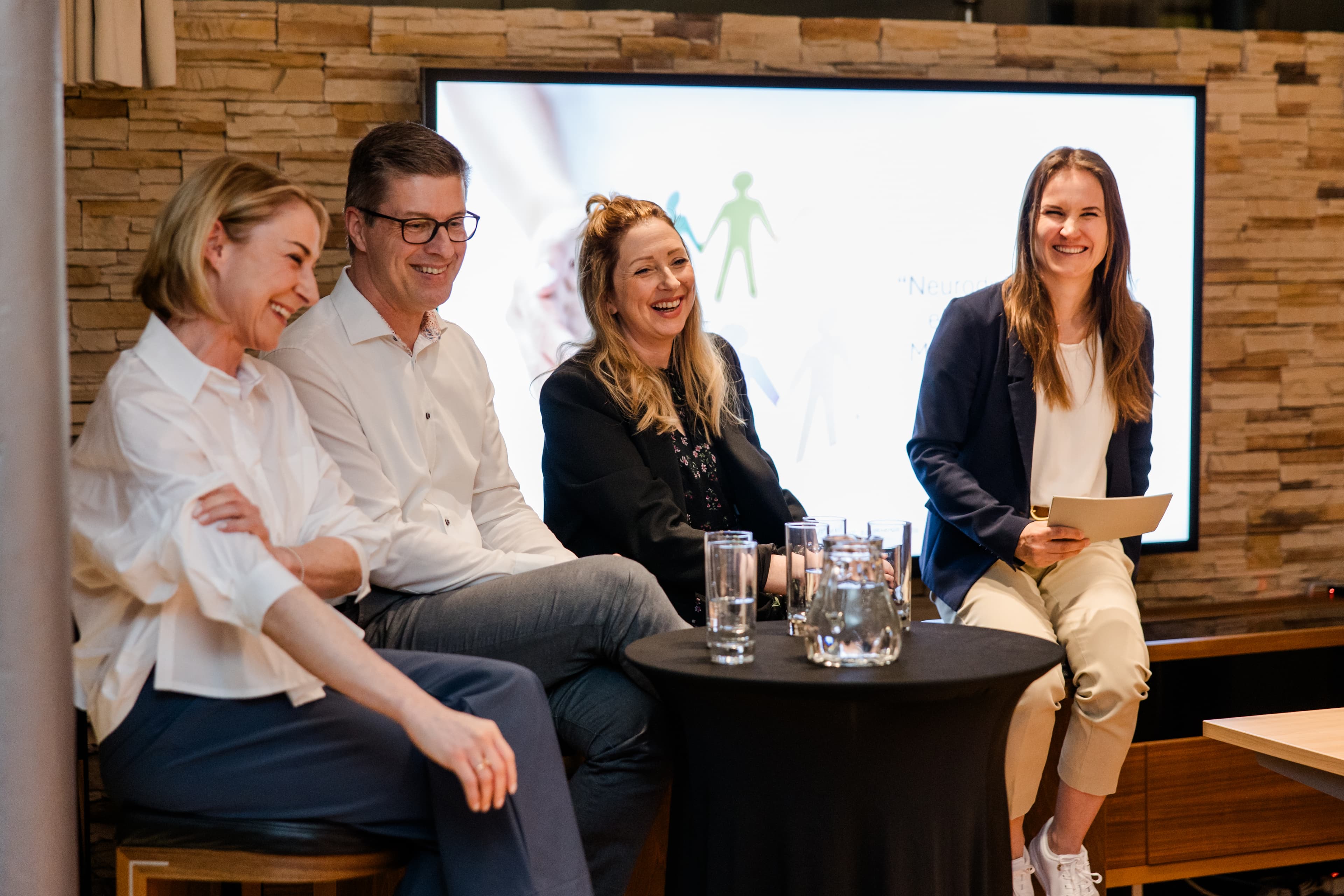
Beyond its strong industry and innovative spirit, it is above all the cultural diversity that shapes our region. Around 40% of 15- to 24-year-olds here have at least one parent whose native language is not German. This diversity creates a dynamic, international environment in which understanding and respectful interaction across cultures is increasingly important. For this reason, intercultural competence was the focus of the second edition of our Diversity Evening, held on March 12, 2025, in cooperation with okay.zusammen leben.
Intercultural Competence in Everyday Life
Vorarlberg is internationally connected, with many companies operating globally, and this interconnectedness is reflected in society as well. But how can people live and work effectively and harmoniously in a culturally diverse environment? A key aspect of intercultural competence is the ability to shift perspectives and understand different viewpoints. Only then can misunderstandings be avoided and respectful collaboration established.
A simple everyday example illustrates how subtle exclusion can occur: For many locals, the dialect is an integral part of their identity. For those who do not speak it, however, it can quickly become a barrier—they often feel left out. This example highlights the multidimensional nature of intercultural encounters: even the indigenous population can contribute to mutual understanding simply by consciously using standard German. Often, this happens unconsciously—making it all the more important to be aware of these dynamics and actively build bridges.
Another interesting insight from the lecture was that culture is not one-dimensional but consists of multiple reference groups. People behave differently depending on the environment. Whether with family, colleagues, in associations, or within a federal state, each group has its own cultural traits that we often adapt to naturally. Being aware of these diverse cultural affiliations facilitates mutual understanding, promotes respectful communication in everyday life, and helps avoid falling into the "identity trap."
Prof. Stefan Kammhuber (OST – Eastern Switzerland University of Applied Sciences) provided valuable insights during his keynote. This was followed by an engaging panel discussion with Dr. Eva Grabherr (okay.zusammen leben) and Simmi Walia (Omicron Electronics GmbH), focusing on practical experiences and solutions.
The conversations and exchanges after the official program highlighted just how important and timely this topic is—not only for companies but for society as a whole in Vorarlberg.
A big thank you to our speakers for their valuable contributions, to okay.zusammen leben for the excellent collaboration as a partner, to "BeGeisterei" for catering, and to Nina Bröll for capturing the event in photos.
Thank you for an inspiring evening!
We look forward to the next edition and to continuing the dialogue on this important topic.
)
)
)
)
)
)
)
)
)
)
)
)
)
)
)
)
)
)
1 of 18
Weitere Beiträge:

Vera Klien - 25. Juni
Fokus auf den Kundennutzen
Der größte Mehrwert von Executive Search liegt oft nicht primär darin, überhaupt Kandidatinnen und Kandidaten zu finden. Der wahre Hebel liegt woanders: Er liegt darin, Unternehmen die Sicherheit zu geben, am Ende die richtige Entscheidung getroffen zu haben.
Vera Klien - 10. März
3. Diversity Themenabend:
Rückblick: Diversity Themenabend
Vera Klien - 6. August
Neurodiversity in the Workplace:
Neurodiversity in the Workplace: Why Thinking Differently Can Be an Advantage

© 2026 Klien Executive Search GmbH. All Rights Reserved